
Shop like a local
Bring small cash and a reusable bag. Ask the price before buying and do not be shy to look at different stalls.
Cebu City · Sugbo · Philippines
Pamilihang Carbon · 59 M. C. Briones St, Cebu City, 6000 Cebu, Philippines
Redevelopment at Carbon is ongoing; some entrances, stall positions and traffic flow may change. Follow on-site signage on the day of your visit.
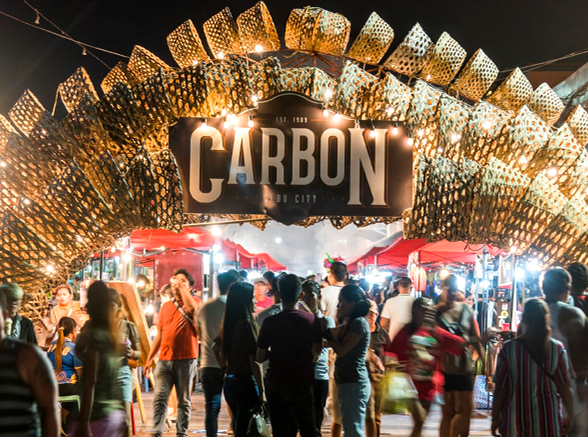
Heart of downtown
Market, food and heritage landmarks within a single walk.
About Carbon
Pamilihang Carbon · Cebu City
Welcome to Carbon Market, widely recognized as the central Pamilihang Carbon. Located in the heart of Cebu City, Cebu, Philippines, this destination serves as a primary hub for travelers visiting the region.
In Filipino, “Pamilihang Carbon” and “Carbon Market” refer to the same place: the main public market of downtown Cebu. Here, wholesale produce meets daily local shopping, street food and heritage landmarks — which is why it naturally starts an Old Cebu walking loop.
The Carbon experience
Carbon is one of the best-known public markets in Cebu. Its beauty is in the real movement of the city: fruit and vegetables, fish, meat, dry goods, handicrafts and food — not a curated display, but everyday buying and selling.
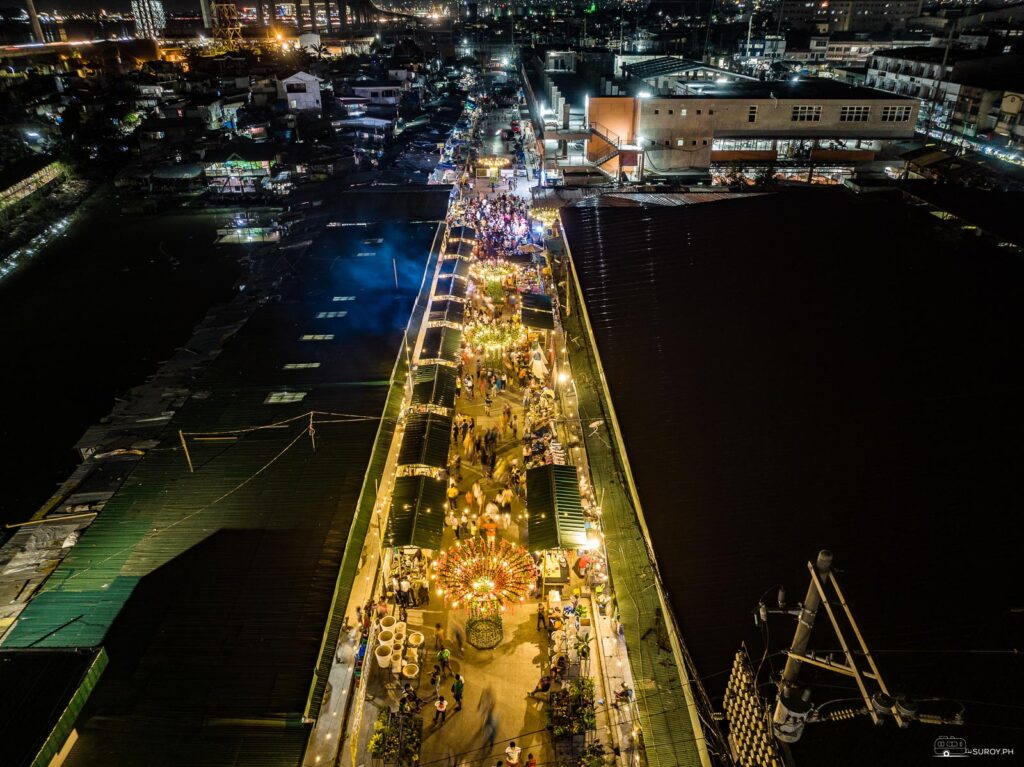
In the early morning, the produce, seafood and wholesale rhythm is at its clearest.
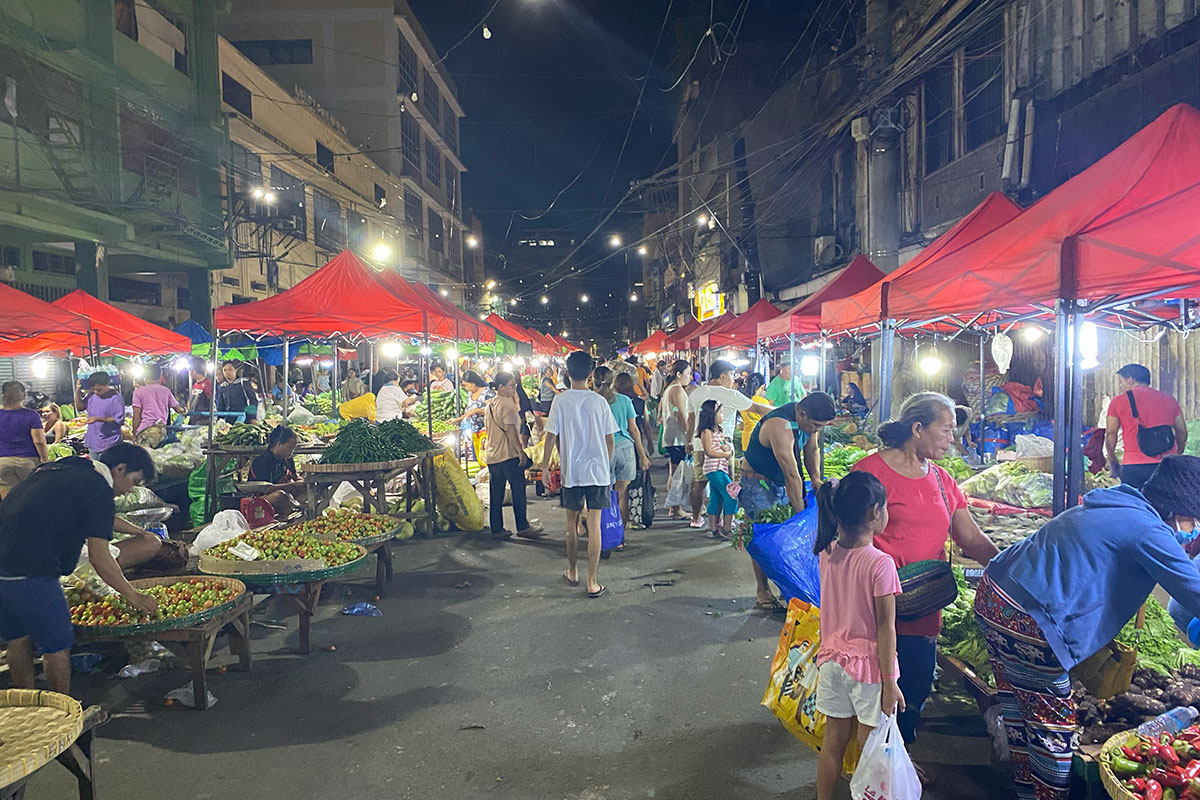
Bring small cash and a reusable bag. Ask the price before buying and do not be shy to look at different stalls.
This is an active public market. Some walkways are wet or full of delivery carts, especially at busy hours.
After the market, it is easy to continue to Magellan’s Cross, the Basilica and Fort San Pedro.
Practical guide
Carbon is a working market. The best plan is flexible: choose your time, know your transport, and leave extra schedule room.
Cost / what you pay
Entry to the public market is free. Just budget for what you buy, food, transport and parking if you bring a car.
Best time
For the freshest arrivals and a cooler walk. If you want a lively food-and-city atmosphere, late afternoon is also good.
For food stops, city lights and a more relaxed walk after the midday heat.
Duration
Enough to walk around, eat and watch market life. Make it a half-day if you add the heritage loop.
Parking
There is parking in the redeveloped Carbon area and near Pusô Village. Because redevelopment continues, entry points and available slots can change.
Tip: follow the official parking signs and marshals; do not rely on old online route screenshots.
Opening hours
Public listings usually show operations until evening, but produce, retail and food stalls do not share one opening/closing time. If you plan to visit a specific stall, check it on the day of your visit.
Carbon Market weather
Downtown Cebu City · 10.2914° N, 123.8991° E · Figures come from a numerical weather forecast for the Carbon Market coordinates and refresh automatically when the page loads. For typhoons and storm signals, follow the official advisory from PAGASA (Philippine Atmospheric, Geophysical and Astronomical Services Administration).
Safety notes
Safety first: adjust your timing and route if you can, and follow official advisories.
At the market now
32° / 25° ·UV index 8 (very high) ·Wind calm
Sunrise: 05:34 ·Sunset: 17:22 ·Rain today: 5 mm
Last update: 2026-10-27 · 17:00
Umbrella today?
A small folding umbrella or hat is useful; passing showers possible.
What to wear
Plan your visit
What to bring
Next 7 days
Transport details
Do not memorize old jeepney route codes. Downtown traffic and redevelopment can change the path; destination-based riding is more reliable.
Walk toward the Carbon district. This is the easiest pairing if you are doing a heritage walk downtown.
Taxi / ride app is easiest with heavy luggage. If you travel light, you can combine Plaza Independencia and Fort San Pedro into your route to Carbon.
Taxi or ride app for a direct trip. On the jeepney, look for a “Carbon” signboard and confirm with the driver or conductor before boarding.
A taxi or app-based ride is the most practical door-to-door option, especially if it is your first time downtown. Set “Carbon Market, M. C. Briones St” as the destination.
Transport details
Downtown Cebu is known for heavy traffic and changing routes because of redevelopment. It is more reliable to travel by destination ("Carbon, M. C. Briones St") than to memorize old route codes.
First-time visitor, with luggage, time-sensitive
How to ride
Tip: Do not accept a "fixed special rate" from unregistered drivers in the arrival hall; use the official queue or app.
Traveler with light luggage who wants the local experience
How to ride
Tip: Routes change with roadworks and one-way adjustments. Confirm with the driver before boarding and do not assume the route matches what you read online.
Short distance within downtown, no luggage, rain
How to ride
Tip: A tricycle is for local short trips; for longer distances, taxi or jeepney is faster and cheaper.
Family, seniors, midday heat, with luggage
How to ride
Tip: Avoid 7–9 am and 4–7 pm. In rain, add time — surge and flooding can add 20–30 minutes.
From provinces south and north of Cebu and nearby islands
How to ride
Tip: The bus terminal is not at the market itself. Budget the final hop to Carbon into your plan.
Family with child gear, or lots of purchases
How to ride
Tip: If your hotel has a shuttle or your group can grab a ride, the trip is easier than driving into crowded downtown.
Carbon fits best in a walking loop: from Basilica Minore del Santo Niño and Magellan’s Cross it is a few minutes; from Colon Street about 10–15 minutes; from Fort San Pedro and Plaza Independencia about 10–20 minutes. Watch for delivery carts and wet floors in the walkways.
Market accessibility is inconsistent: some entrances are narrow, have steps and are crowded at peak. The smoother approach is to arrive early, use the wider outer aisles, and ask security or a marshal where the best drop-off is on the day. Wear closed, non-slip shoes.
Services & facilities
Carbon is a working market, not a curated attraction. Its facilities are shared by shoppers, vendors and delivery crews — so it pays to arrive prepared, and to think in terms of facility types (public restroom, food court, supermarket) rather than one specific business.
Public restrooms sit inside or beside the market buildings and in downtown commercial blocks. They are usually pay-per-use with a small fee, so bring coins, tissue and hand sanitizer. Not all have soap and running water, and conditions vary through the day.
Parking areas are found inside the redeveloped Carbon district and in nearby commercial blocks; some have motorcycle and bicycle zones. Avoid roadside parking that blocks delivery lanes — it is usually towed or clamped. Follow on-site signage and marshals, as entry points shift with redevelopment.
The simplest choices are carinderias and market food stalls (pusô, grilled items, soups), then food hubs/courts with seating, and bakeries or convenience stores for a quick snack. Vegetarian, halal and allergen-labeled options are limited — ask the stall directly and skip anything unclear.
Downtown has budget inns, pension houses and business hotels; larger hotel clusters are in uptown business districts about 10–20 minutes away. Choose by location, accessibility and noise tolerance — downtown is lively and noisy, especially early morning.
For bottled water, toiletries and over-the-counter medicine, there are convenience stores, a supermarket in the mall and pharmacies (botika) on downtown streets. Fresh fruit, vegetables and fish are cheaper and fresher at the market itself, so do daily shopping there.
Fuel stations are on the main roads toward downtown and the port, but lanes get tight at peak hours. Public EV charging is still limited in Metro Cebu and is usually at a mall or hotel parking — if you drive electric, plan your charging stop and confirm in your app on the day.
Cash is still fastest at the market, especially small bills and coins. ATMs and banks are on downtown streets and in the mall; there is usually a withdrawal fee and a limit. QR/e-wallet and cards are accepted at some stalls and food hubs but not all — do not rely on a single payment method all day.
There is a pharmacy, clinic and hospital within easy reach of downtown. The most common visitor issues are heat exhaustion, dehydration and slipping on wet floors. Bring your regular medication, wear closed shoes, and ask vendors or security for help if needed.
Mobile data generally works downtown, but slows in dense crowds or under metal roofs. Free wifi is available in malls and some food hubs; do not schedule an important call at the market itself, and download your map and transport info beforehand.
Editorial policy: this is an independent, non-profit visitor guide. We mention only types of service (public restroom, food court, supermarket, pharmacy) and do not recommend, rank or receive payment from any specific business or brand.
Market sections
Carbon is not one building. It is a cluster of zones, numbered units and temporary structures, and the layout shifts as redevelopment continues. Think of this as a map of "types of stall" rather than a fixed address, and confirm on the day.
You may see names like Pusô Village, Puerta Marina and numbered units (for example Unit 2) on signage or old maps. These are not a guarantee of the current layout: because of redevelopment, the surest "map" is to ask security, a marshal or a vendor on the day of your visit.
Food nearby
The best food plan at Carbon is not a formal reservation. Walk, see what is hot and crowded with locals, and choose from market stalls and nearby food hubs.
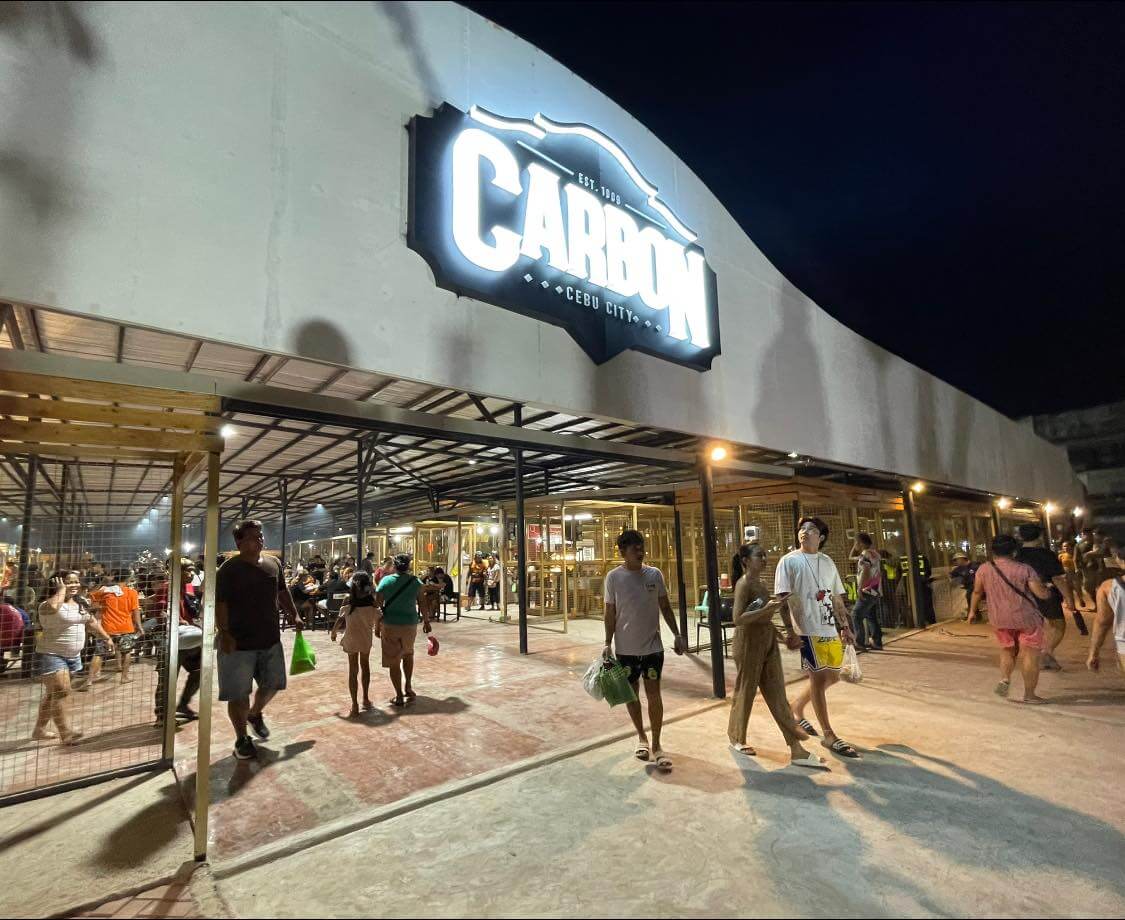
A good stop if you want more organized food choices and seating while staying close to the market.
Find a busy stall, look at the freshly cooked trays, and ask what is fresh off the heat.
If you come from the heritage loop, add a bakery, ngohiong and street-snack stops downtown instead of one big meal.
Nearby places
A short walk via Plaza Sugbo; easy to fold into a heritage walk.
The most famous religious landmark in central Cebu, right next to Magellan’s Cross.
Continue from Plaza Independencia for a clean loop from the market to the bay.
For a deeper look at old Cebu life and architecture.
When visiting Carbon Market, visitors can easily explore surrounding historical landmarks and points of interest, including Magellan’s Cross and Basilica Minore del Santo Niño.
Suggested routes
All routes here are suggestions, not fixed packages. Adjust them to your time, the weather and your energy — the market itself sets the pace.
Routes by traveler type
2–3 hours · relaxed pace
Stops
Tips
3–4 hours · many stops
Stops
Tips
1.5–2.5 hours · flat with seating
Stops
Tips
Half day
Full day
Actual access can change with roadworks, redevelopment and religious events. If you are in a hurry, prioritize the market and the Basilica; if you have time, add the museum and Fort San Pedro.
Quarterly strategy
The summary below is based on long-term monthly climate averages for Metro Cebu (1991–2020 normals) and the usual seasonal pattern of market operations. Use it to plan the month; for the actual day, rely on the forecast block above.
| Period | Climate | Market supply | Crowd | Recommendation |
|---|---|---|---|---|
| Q1 · January–March | Hot but dry; usually 24–32 °C, little rain | Plenty of fresh fruit and vegetables; strong seafood supply; peak holiday goods in January | Very high during Sinulog week; moderate February–March | Best quarter to visit. Go early in the morning, and avoid the city center on Sinulog days if you dislike dense crowds. |
| Q2 · April–June | Hottest months; up to 33–35 °C at noon, habagat and rain start in the afternoon | Lots of summer fruit; seafood slows when wind and sea are strong | Moderate; few people at noon because of the heat | Visit early morning or late afternoon. Bring water, a hat and an umbrella for sudden afternoon rain; avoid noon if you are not used to humid heat. |
| Q3 · July–September | Rainy and typhoon season; frequent rain and flooding in low areas | Can be short after a storm and prices move; dried goods and root crops do well | Low to moderate; tourists thin out | Safety first: check the weather advisory and avoid visiting if there is a storm signal. If you come, use a waterproof bag and closed non-slip shoes. |
| Q4 · October–December | Transition: rain in October–November, cooler and drier in December | Good supply for Christmas; lots of dried fish and processed goods at Taboan | Rises again in December (holiday shopping) | Good balance of weather and supply. Plan extra time for holiday traffic and shop with locals; visit in the morning for fresh produce. |
Wet-market prices are not fixed like a supermarket: they are the result of the produce brought in each morning, sea conditions, transport fuel and holiday or festival demand. So a rainy week can raise vegetable prices, while the peak fruit season can lower them.
Carbon history
The name “Carbon” (coal) is commonly explained as coming from a former coal depot at the site during the Spanish period. Historians do not fully agree, so treat this as a local explanation rather than an official fact.
Over decades, Carbon became Cebu’s main wholesale and retail hub for fruit, vegetables, fish, meat and dry goods — the supply for the whole city and province passes through here.
Because of its location near Pier 1, Colon Street and Plaza Sugbo, Carbon became a junction of commerce, transport and the everyday life of old Cebu.
Carbon Market continues to be modernized, but it remains an open public market. Expect temporary changes to entrances, stall positions and traffic flow while works continue.
History & stories
Carbon is more than a place to buy vegetables. It is one of the oldest and most discussed public markets in Cebu, and its story runs through the port, the colonial city, the war and the everyday food of Cebuanos.
History and legend 01
The common explanation is that the name comes from "carbon" (coal) — a coal depot or storage near the port during the Spanish period, where coal for ships and city kitchens was unloaded. There is also a local tale that the spot was where coal from ships was discharged. Historians do not fully agree, so treat this as a local etymology passed down, not an official document.
History and legend 02
In colonial Cebu, Parian was the district of Chinese and mestizo merchants near the port and the church. The exchange of rice, salt, fish and imported goods made this area a commercial center — and Carbon grew from that same pressure: the port brought supply, and the market distributed it across the city.
History and legend 03
Downtown Cebu was badly hit in World War II; many structures were destroyed and the city had to be rebuilt. The market recovered out of necessity and became a formal public market in the decades after the war. This layer of history is why the area around Carbon mixes old and new structures.
History and legend 04
Pusô (hanging rice) is cooked inside a woven coconut-leaf pouch and hung at stalls. By tradition it was food for travelers, traders and workers — portable, not wasteful and needing no plate. To this day, pusô remains a symbol of the market: cheap, practical and eaten by hand.
History and legend 05
The Taboan section (dried fish and processed seafood) is one of the most recognizable smells of Carbon: smoke, salt and dried fish. It is among the oldest forms of food preservation before refrigeration — dried and salted to last the trip and the rainy season. For Cebuanos, this is not just a product: it is the taste of home.
History and legend 06
There is a local saying that Carbon hardly sleeps. Wholesale moves in the small hours (about 2–5 am), retail fills the morning to noon, and the food and evening crowd returns in the afternoon and night. This 24-hour cycle is why the time you visit changes what you see.
History and legend 07
Every January the city prepares for Sinulog, the devotion and festival of the Santo Niño. The market gets more crowded: candles, flowers, food and party supplies fill the walkways. It is one of the most crowded yet most colorful times to visit — and one of the hardest for transport.
A clear line between fact and story: the war and colonial dates are better documented, while the name’s etymology and the Parian tales are passed down as local tradition. We do not claim there is only one true version.
How it works & responsibility
The word "wet market" does not mean dirty. It refers to a market that sells fresh food — meat, fish, fruit and vegetables — where the floor is kept washed to stay clean and cool without full refrigeration.
How this works
Usually the path is: farmer and fisher → trader consolidation → overnight wholesale trading → stallholder → buyer. Because of this, fresh produce reaches the market before dawn and prices move through the day on supply and demand. A shorter chain means less transport emission and more going back to producers.
How this works
Buying at the market supports farmers and fishers in Cebu and nearby islands like Bohol, Negros and Leyte, and keeps alive local varieties of fruit and vegetables you will not see in a supermarket. Seasonal food is cheaper, tastier and has fewer food miles. It is a real food-system lesson you can see in one walk.
How this works
Pick a stall that is busy with fast turnover — that means fresh stock. Avoid meat and fish left in the heat without ice; keep raw and cooked food separate; wash your hands or use sanitizer before eating; and bring your own bag. If you are unsure of the water or ice source, drink bottled water.
How this works
The market can generate a lot of organic waste and single-use plastic from packaging. You can bring a reusable bag, bottle and small container for fruit; refuse excess plastic; and do not drop litter on the walkway, which blocks drainage and adds to flooding. Small habits, big effect when everyone does them.
How this works
The market is a workplace, not a photo studio. Ask permission before a close-up of vendors and buyers; avoid blocking delivery paths; and do not photograph prices or documents not meant for the public. Buying a little from the stall you photograph is a good way to show respect.
How this works
Ask the price before buying and bring small bills and coins so the vendor is not stuck for change. Bargaining is usually small on fresh produce; a polite question works better than aggressive haggling. Leaving a tip is not required, and rounding up the amount is a voluntary kindness, not an obligation.
This section is written for public education. It does not claim to be an official food-safety inspection, and if you have symptoms from food, seek medical help and report it to the local health authority.
Reviews & ratings
Ratings from Google Maps user reviews
7,611 reviews · Market
Google Maps rating snapshot · 2026-10-18 ·View all Google Maps reviews ↗
Google Maps · · Recorded on this date; may change.
View all reviews on Google MapsThe rating and review count are shown here as a traveler reference; the real and latest reviews are on the Carbon Market Google Maps listing.
Map & location
Cebu City, 6000 Cebu, Philippines · Plus code 7VRX+HM Cebu City
In a navigation app
Search “Carbon Market” and confirm the pin is at M. C. Briones St / downtown Cebu.
Open in Google MapsFor official city and regional information, visit theCebu City Governmentand thePhilippines Department of Tourism.
FAQ · Frequently asked
Carbon Market (Pamilihang Carbon) is at 59 M. C. Briones St, Cebu City, 6000 Cebu, Philippines. Its Plus Code is 7VRX+HM Cebu City, and it sits in the downtown district near Magellan’s Cross and the Basilica Minore del Santo Niño.
Carbon is one of the oldest public markets in Cebu and a long-standing wholesale and retail center of downtown. Its name is commonly explained as coming from a former coal (carbon) depot. It continues to be redeveloped, but it remains the everyday market of Cebuanos.
No. Entry to the public market is free. You only pay for what you buy, food, transport and other personal costs.
Early morning is best for the freshest arrivals and cooler walking. If you prefer a lively food-and-city atmosphere, late afternoon is also good. Hours vary by stall.
Usually 1–3 hours is enough for the market, food and photos. Add more time if you include the Basilica, Magellan’s Cross and Fort San Pedro.
Taxi or a ride app is easiest. On the jeepney, look for a signboard heading to Carbon and ask the driver, because routes shift with traffic and redevelopment.
There are parking options inside the redeveloped Carbon area and near Pusô Village. Access and capacity can change, so follow on-site signs and marshals on the day of your visit.
Yes, but remember it is an active market: some walkways are wet and there is delivery traffic. Closed shoes and a slower pace are more comfortable.
Flower vendors (the flower market) gather in a row or cluster inside the Carbon district, usually near the main market entrances. There is not always a big sign, so the fastest way is to ask vendors: "Where are the flowers?" Early morning is best for fresh cut flowers; prices rise on the eve of fiestas, Valentine’s Day and Undás. Because of redevelopment, the exact row can move — confirm on the day.
The interim (temporary) buildings and stall rows are where many vendors moved during Carbon’s redevelopment. Day-to-day shopping and selling continue there. Expect simpler structures, tighter paths and changes in entry points or stalls — so follow on-site signage and marshals rather than an old route screenshot.
Cooked food, carinderias and pusô (hanging rice) are in the market’s food zone, usually named by locals after the unit or block they occupy. Follow the smell of grilling and the stall with a long local line; ask vendors where the nearest food spot is now, given the ongoing redevelopment.
Yes, public restrooms are inside or beside the market buildings and in downtown commercial blocks. They are usually pay-per-use with a small fee, so bring coins, tissue and hand sanitizer, as soap and water are not always complete.
The easiest is the official airport taxi or an app-based ride to "Carbon Market, M. C. Briones St, Cebu City" (about 30–60 minutes depending on traffic). A cheaper alternative is the airport shuttle/bus to the city, then a jeepney or taxi downtown.
The jeepney is the cheapest. Look for a sign reading "Carbon", "Santo Niño", "Taboan" or "Plaza Sugbo", confirm with the driver before boarding, and carry small bills. A tricycle costs a little more but is door-to-door for short distances.
Bring an umbrella or rain jacket and a waterproof bag for your things. Some market walkways get wet and flood, so wear closed non-slip shoes. If there is a storm signal or tropical cyclone warning, postpone the visit.
Cash is still the most reliable at the market, especially small bills. QR/e-wallet and cards are accepted at some stalls and food hubs but not all, so carry cash and know where the ATM is if you stay long.
Most locals buy at Carbon every day, and the good practice is to pick a busy stall with fast turnover, avoid food left in the heat without ice, cook it properly and drink bottled water. If you are unsure of the water or ice, skip it.
Market accessibility is inconsistent: some entrances are narrow, have steps and are crowded at peak. Better to arrive early, use the wider outer aisles, and ask security or a marshal where the best drop-off is on the day. Food hubs and Plaza Sugbo have more seating options.
There are official parking areas inside the redeveloped Carbon district and in nearby commercial blocks; follow on-site signage and marshals as entry points shift. Fuel stations are on the main roads toward downtown and the port; public EV charging is still limited and is usually at a mall or hotel parking.
Carbon is a working public market that generally operates daily, but individual stall and zone hours vary and some sections shift with redevelopment. There is no single official "open/closed" status for the whole market. The most reliable approach is to plan for early morning (the wholesale rhythm and freshest produce) and to confirm specific stalls on the day of your visit.
Most visitors go without trouble, but it is a busy working market, so take normal city precautions: keep valuables out of sight, use a cross-body bag, agree tricycle fares before boarding, and avoid displaying large amounts of cash. Watch wet, crowded walkways for slips, and follow on-site marshals. As with any downtown area, stay aware of your surroundings, especially in crowded fiesta periods.
Sources
Google Maps · 2026-10-18
Google Maps · · Recorded on this date; may change.
View all Google Maps reviewsLocation & hours
59 M. C. Briones St, Cebu City, 6000 Cebu, Philippines · Plus code 7VRX+HM Cebu City. Operating hours and category (Market) are from the public listing.
Open Google MapsOfficial source
For official city announcements, traffic advisories and updates on the Carbon district redevelopment.
cebucity.gov.phOfficial tourism
National tourism portal for regional guidance, travel advisories and destination information in Central Visayas.
tourism.gov.phImages
Megawide Construction Corporation, Chill and Travel, Suroy.ph, and PH Radio Travel Book. Stored locally in the site build; see the README for source credits.
This website is an independent, unofficial visitor guide. Ratings and reviews come from Google Maps and are not claimed as our own; all Google links continue to point to the official listing.